
AI Mania - The Next Industrial Revolution? Or Another Dot-Com Bubble?

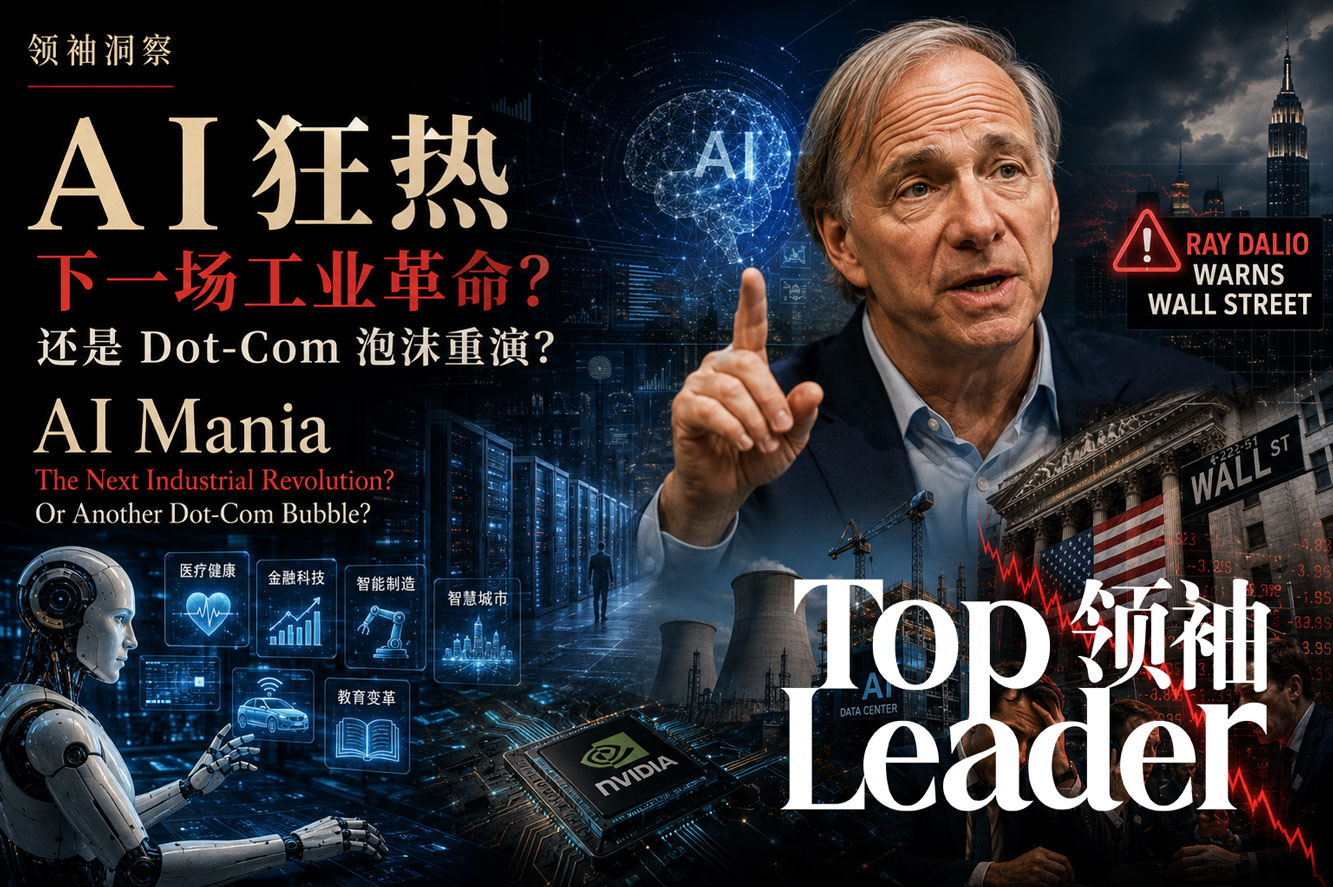
Over the past two years, generative artificial intelligence has ignited an extraordinary wave of excitement across global capital markets. Nvidia’s market value surged to the top of the world, while Microsoft, Google, Meta, Amazon and other technology giants entered an unprecedented capital-expenditure arms race.
Investors increasingly feel that they are participating in a once-in-a-generation opportunity—one that may never return if they fail to act now.
Artificial intelligence has rapidly evolved from an experimental technology into a strategic foundation for global economies, corporate competition and national power. Semiconductors, data centres, cloud platforms, electricity infrastructure, model training and AI applications now form an enormous capital chain.
Expectations have also expanded far beyond workplace productivity. AI is increasingly expected to transform healthcare, finance, education, manufacturing, transportation, media, defence and nearly every other major industry.
Yet as excitement approaches its peak, warning signals are becoming louder. Ray Dalio, founder of Bridgewater Associates, has warned that the artificial-intelligence sector is beginning to display familiar characteristics of an asset bubble.
The danger is amplified by the broader environment. This technology boom is unfolding while public debt continues to rise, interest rates remain restrictive, geopolitical tensions intensify and global supply chains fragment.
Dalio has spent decades studying the rise and decline of great powers, debt cycles and changes in the international order. He argues that the global economy may be entering the late stage of a Big Cycle that occurs roughly once every 80 to 100 years.
Under these conditions, a genuine technology revolution and a financial bubble can exist at the same time. AI may transform civilisation, while financial markets simultaneously price decades of future growth into today’s assets.
Is this the beginning of a productivity revolution that will take humanity to a new level of civilisation, or a capital illusion that must eventually face a painful valuation reset?
To understand today’s AI mania, we must look back at the internet boom of the late 1990s and examine the recurring relationship between technological revolutions and financial bubbles.
Chapter One|History Rhymes: AI Mania and the 2000 Dot-Com Bubble
Mark Twain is often credited with the observation that history does not repeat itself, but it frequently rhymes. When today’s AI boom is compared with the internet bubble of the late 1990s, the similarities are striking. At the same time, several fundamental differences may shape a very different final outcome.
Massive capital expenditure and the fear of missing out
During the late 1990s, the internet was regarded as a revolutionary technology that would transform the world. Telecommunications giants such as Cisco, Lucent and WorldCom invested enormous sums in fibre-optic networks, switches and routers.
The prevailing logic was simple: build the infrastructure first, and internet traffic will eventually arrive.
Capital began chasing almost every company associated with the internet. A business with a “.com” name could often attract extraordinary valuations. Investors paid less attention to profits, price-to-earnings ratios and cash flow, while focusing instead on website traffic, user growth, market share and ambitious future projections.
Today’s AI market is driven by a remarkably similar logic. Microsoft, Google, Meta and Amazon are spending tens or even hundreds of billions of dollars each year on GPUs, data centres, cloud capacity, power infrastructure and advanced networks.
The dominant narrative is equally direct: companies that fail to lead in AI computing power and model development may be left behind.
This fear has created intense FOMO. Companies fear falling behind competitors, funds fear holding insufficient exposure, and individual investors fear missing the next great technology-driven wealth cycle. Capital therefore continues to push valuations higher.
Real profits versus businesses built largely on promises
The greatest difference between the AI boom and the Dot-Com bubble lies in the financial strength of the leading companies.
During the internet bubble, many highly valued businesses lacked sustainable business models. Companies such as Pets.com depended on continuous capital injections and customer subsidies. When financing stopped, the businesses could no longer survive.
Today’s AI leaders—including Nvidia, Microsoft, Apple, Google and Amazon—possess enormous free cash flow, established customer bases, mature business models and powerful technological ecosystems.
Nvidia’s GPUs generate genuine revenue and profit. Cloud providers receive real payments from enterprise customers. This financial strength represents a substantial foundation beneath the AI boom.
However, strong companies can still become overvalued assets. When markets price ten or twenty years of future growth into today’s share prices, valuations may move far ahead of economic reality.
The more important question is whether the construction of AI infrastructure is advancing faster than the commercialisation of downstream applications.
Technology companies are investing immense sums in data centres, but someone must ultimately pay for the computing capacity. If corporate customers cannot generate sufficient productivity gains, revenue growth or cost savings from AI, subscription income may fail to justify the scale of investment.
When capital expenditure continues to rise while returns begin to slow, declining return on invested capital may become the industry’s most difficult challenge.
Chapter Two|Schumpeter’s View: A Bubble Can Still Build the Infrastructure of Civilisation
The deeper significance of AI mania can be understood through Joseph Schumpeter’s theory of “creative destruction.”
Schumpeter argued that innovation is the true engine of capitalist development. Every major wave of innovation destroys parts of the existing economic structure while creating new companies, professions, business models and sources of wealth.
The steam engine transformed production. Railways transformed transportation. Electricity transformed industry and cities. The internet transformed the flow of information. Artificial intelligence may redefine knowledge, decision-making and labour itself.
Technological revolutions frequently produce overinvestment
In Schumpeter’s framework, every era-defining technology tends to attract excessive investment. Investors cannot accurately identify all the eventual winners, so capital flows into a wide range of companies, projects and infrastructure.
Many investments eventually fail. Numerous companies collapse, and asset prices may fall sharply. Yet the infrastructure created during the bubble does not entirely disappear.
The railway mania of the nineteenth century generated speculation and bankruptcy, but it also left the United States with a national transportation network. The fibre-optic bubble around 2000 destroyed many telecommunications companies, yet the excess network capacity later reduced internet costs and supported mobile connectivity, cloud computing, streaming and e-commerce.
Artificial intelligence may follow a similar path. Even if many AI companies fail and valuations collapse, the economy may retain data centres, semiconductor capacity, model-development tools, software platforms and skilled talent.
These assets could lower the future cost of AI adoption and become the foundation of a new technological civilisation.
A bubble therefore does not mean the underlying technology has no value. It may represent the expensive price society pays to build the infrastructure of the future.
The critical distinction lies between the long-term value of the technology and the short-term price of the asset. AI may have an enormous future, while the shares of a particular AI company may still become severely overvalued. Both conditions can exist simultaneously.
Chapter Three|Carlota Perez: AI May Be Near the Peak of the “Installation Phase”
In Technological Revolutions and Financial Capital, economist Carlota Perez argues that major technology revolutions generally pass through two broad stages: the installation phase and the deployment phase.
The installation phase: financial capital drives rapid infrastructure expansion
The installation phase is dominated by financial capital. Money floods into the emerging technology, companies race to build infrastructure, start-ups multiply and valuations rise.
During this stage, investors believe the new technology will transform the world. They therefore tolerate high valuations, weak profits and prolonged losses. The market becomes filled with speculation, grand narratives and stories of sudden wealth. The phase often ends with a financial crash or bubble collapse.
Artificial intelligence may currently be near the peak of this installation phase. Capital is pouring into GPUs, servers, data centres, cloud infrastructure, power systems and large-scale models.
The market has placed an extraordinary amount of value on the “picks-and-shovels” providers—the companies selling the infrastructure required for the AI gold rush.
However, the long-term sustainability of the revolution depends on whether the downstream “gold miners” can create sufficient economic value. Can enterprise customers use AI to meaningfully reduce costs, increase revenue and improve productivity? Will consumers continue paying subscription fees? Can AI application companies build healthy profit structures?
If downstream commercialisation fails to keep pace with infrastructure expansion, a large amount of capital expenditure may produce inadequate returns.
The deployment phase: technology spreads after the financial reset
After the bubble breaks, speculative capital retreats and technology costs generally decline. Markets eliminate projects that lack genuine value, while resources shift toward companies that solve real problems, generate revenue and improve efficiency.
This marks the deployment phase. Technology ceases to be merely a fashionable investment theme and begins to penetrate manufacturing, healthcare, education, agriculture, logistics, retail and public administration.
The internet did not disappear after the Dot-Com crash. Broadband, smartphones, e-commerce, social media and cloud computing matured rapidly during the following decade.
Many of the companies that ultimately changed the world used the lower-cost infrastructure left behind after the bubble and built sustainable business models.
The long-term winners of artificial intelligence may emerge in a similar environment. Today’s attention is concentrated on chips and data centres. Tomorrow’s greatest value may be created by companies that use AI to transform traditional industries, improve organisational efficiency, reduce service costs and redesign customer experiences.
Chapter Four|Ray Dalio’s Warning: AI Mania Meets the End of an 80-Year Big Cycle
Ray Dalio studied five centuries of major-power cycles and developed a framework describing long-term debt and world-order cycles. In his view, human societies tend to experience a major cycle approximately every 80 to 100 years.
A Big Cycle generally begins with peace, productivity growth, expanding credit and increasing wealth. Over time, debt accumulates, wealth inequality widens, political conflict intensifies and confidence in the monetary system weakens.
The cycle eventually moves toward a period of domestic disorder and a restructuring of international power.
Under Dalio’s framework, the world may now be moving between the fifth and sixth stages. Fiscal and debt pressures are increasing, internal political conflict is intensifying, and competition among major powers has expanded from trade and technology into finance, military power and global governance.
The AI boom is therefore taking place in an unusually complicated environment.
Unsustainable public-debt pressure
Public debt across major economies has reached historic levels. The United States government is carrying an increasingly heavy interest burden, while high interest rates restrict the financial flexibility of governments, companies and households.
As debt-servicing costs rise, financial markets become more sensitive to liquidity and monetary-policy changes. AI development currently requires enormous amounts of capital.
If financing costs rise, economic growth slows or fiscal support becomes more constrained, highly valued technology assets may face significant pressure.
Geopolitical conflict and fragmented supply chains
The internet boom of 1999 occurred during an era of accelerating globalisation. International trade expanded, cross-border capital flows increased and supply chains became more integrated.
Today’s AI competition is taking place amid semiconductor restrictions, technology controls, geopolitical conflict and supply-chain de-risking.
Advanced chips, semiconductor equipment, critical minerals, electricity and data security have become matters of national strategy.
Companies must therefore manage more than commercial competition. They must also navigate export controls, national-security regulations and the risk of supply-chain disruption.
Artificial intelligence may consequently develop through increasingly separate technological systems across countries and regions, raising both capital costs and operational complexity.
Systemic risk created by excessive market concentration
A large share of recent gains in the US stock market has been driven by a small group of major technology companies. The increasing weight of the “Magnificent Seven” means that the broader market has become heavily dependent on the earnings and capital-expenditure plans of a limited number of firms.
As long as these companies continue investing in AI and producing strong revenue growth, investor confidence may remain intact.
However, if several of them reduce AI spending or report weaker-than-expected AI revenue, the market may rapidly reassess valuations across the entire supply chain.
When market gains depend on a small number of companies, downside risk also becomes highly concentrated. This reflects the asymmetric danger highlighted by Dalio: the remaining upside may become increasingly limited, while a reversal in expectations could trigger a severe contraction in valuations.
Chapter Five|AI Is a Great Technology, but Great Technologies Can Still Produce Expensive Stocks
Artificial intelligence is not a fraud. It may become one of the most important productivity tools in human history.
AI can process enormous volumes of data, support decision-making, automate knowledge work and accelerate progress in medical research, industrial production, education and scientific discovery.
Yet a great technology does not make every related asset attractive at every price.
The internet genuinely transformed the world. Even so, the Nasdaq suffered a dramatic collapse after the 2000 bubble. Many investors correctly identified the long-term future of the internet but still endured years of losses because they purchased assets at unsustainable prices.
Amazon later became one of the world’s most successful companies. Yet investors who bought near the Dot-Com peak still faced a prolonged period of volatility and waiting before recovering their capital.
The most difficult task in investing is often not determining whether a technology will succeed. It is determining how much future success has already been included in today’s price.
A company may possess an excellent product, strong leadership and a vast market. If its valuation already assumes an almost perfect future, the potential investment return may still be limited.
Chapter Six|Three Final Lessons for Modern Investors
The first lesson is to distinguish between an infrastructure bubble and long-term technological value.
Semiconductors, data centres and computing infrastructure are supported by genuine demand. Yet when investment grows much faster than the revenue generated by downstream applications, the valuations of some companies may come under pressure.
Investors should examine whether capital expenditure can generate sustainable returns. Free cash flow, return on invested capital, customer willingness to pay and proven commercialisation matter more than an attractive AI narrative.
An AI story can attract attention. The ability to convert AI into revenue and profit creates durable value.
The second lesson is that future winners may gradually shift from computing-power providers to AI-enabled businesses.
Infrastructure suppliers often benefit most during the installation phase. The greatest value in the deployment phase, however, frequently emerges at the application level.
Investors should pay attention to companies that use AI to reduce costs, improve efficiency, enhance products, optimise supply chains and redesign traditional business models.
Some of the most valuable AI companies of the future may not even include “AI” in their names. Their advantage may come from using the technology more effectively than their competitors.
The third lesson is to strengthen macroeconomic resilience.
Dalio emphasises that during the late stage of a long-term debt cycle, diversification and a strong focus on cash flow are essential tools for managing extreme volatility.
Investors should avoid concentrating all their assets in one group of technology companies, one country or one currency system.
A thoughtful combination of cash, bonds, equities, gold, geographical exposure and different industries can reduce the impact of any single risk on long-term wealth.
Conclusion|The Future of AI May Be Vast, but Capital Markets Must Still Face the Judgment of Reality
Artificial intelligence may launch the next industrial revolution. It may also experience a severe financial reset on the way to that future. These two outcomes can coexist.
Technology can continue advancing while share prices fall. Data centres can become the foundation of a new civilisation while today’s investors still pay excessive prices. Some AI companies may disappear while artificial intelligence continues to spread throughout society.
Mature investors are capable of recognising both the enormous potential of the technology and the financial risks created by valuation.
They do not reject AI simply because markets are excited. They also do not accept any price simply because they believe in AI’s future.
When everyone is chasing AI-related assets, disciplined investors should ask: How much genuine cash flow does the company produce? What return will its capital expenditure generate? How much are customers willing to pay over the long term? If market sentiment reverses, how much value will remain?
The future of AI may indeed stretch toward the stars. Before capital markets reach that destination, however, they will almost certainly pass through a harsh test of technology, valuation, cash flow and economic reality.


Recent Updates


You Might Be Interested