Hainan FTP launches island-wide special customs|A Deep Dive into China’s New Opening‑Up Framework

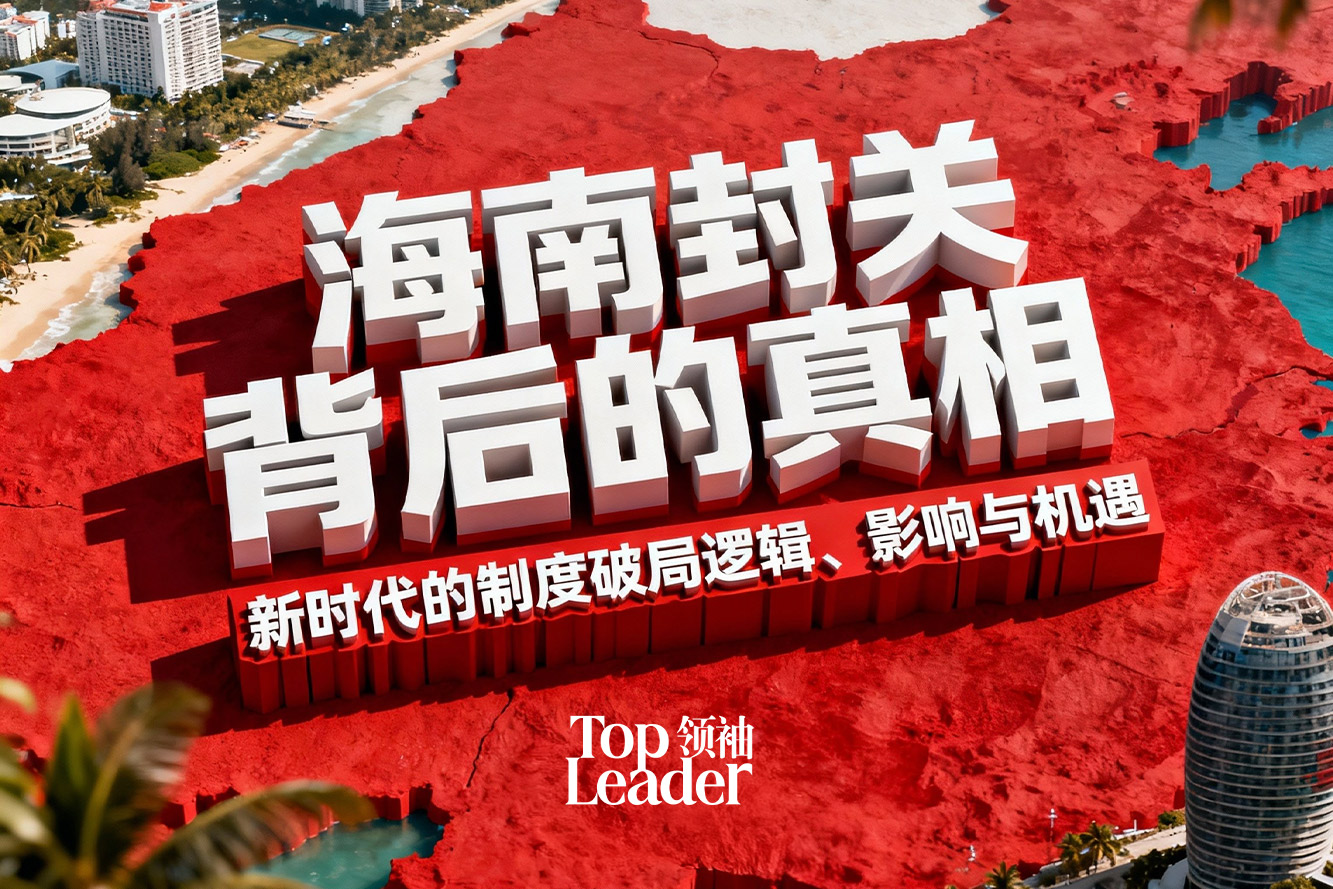
Since December 18, 2025, the Hainan Free Trade Port has officially launched full‑island customs control. This landmark policy has generated widespread discussion, but many people still misunderstand what it actually entails. Does “full island customs control” mean Hainan is being closed off? Far from it. What we are witnessing is a systemic re‑definition of how China opens up to the world, and Hainan is at the center of it.
In this article, we will unpack the political and economic logic behind this shift, explain how it changes the way goods, capital, and people move, and explore what it means for China, global economies, overseas companies, local residents, and business builders.
1. From Misconception to Reality: “Hainan Customs Control” Is Not Closure
When the term “Hainan full island customs control” first appeared in public discussions, many people reacted instinctively, assuming it meant closing Hainan to the outside world, with restrictions on entry and exit. But that interpretation misses the core idea entirely.
Rather than blocking access or isolating Hainan, this policy recalibrates the regulatory framework that defines how Hainan interacts with both the global economy and mainland China. The goal is to establish Hainan as a high‑freedom, more internationally integrated zone for trade, investment, and economic exchange.
Instead of putting up barriers, the policy creates a new set of rules that connect Hainan with global markets more tightly and efficiently. It is not a retreat; it is a strategic reform intended to extend China’s global economic reach and institutional adaptability.
2. Why Did China Choose to Implement Customs Control in Hainan? A Strategic Choice, Not a Passive One
To understand why Hainan was selected, we need to look at the evolving global economic landscape and China’s strategic adjustments in response. Over the past few decades, China has integrated deeply into the global economy. After joining the World Trade Organization, it became the world’s manufacturing hub, attracted massive foreign investment, and built out vast domestic supply chains.
However, rising global trade tensions, the advancement of regional economic integration, and the demand for innovative regulatory frameworks have together created a need for a higher‑level platform for openness than traditional free trade zones offer. Against this backdrop, the idea of a Free Trade Port with broader scope and deeper institutional reform gained traction.
Hainan was chosen deliberately. Unlike highly industrialized regions such as Shanghai or Guangdong, Hainan’s geographic isolation, moderate population size, and relatively undeveloped industrial base make it a prime candidate for bold institutional experimentation. It offers a manageable but meaningful space to test reforms that might later be expanded elsewhere.
This was not a passive choice made out of necessity. Instead, it was a strategic decision to deliberately construct a new opening‑up mechanism—a place where international standards can be piloted with global capital, technology, and talent.
3. What Is Actually Being “Closed” and What Is Being Reopened?
At its core, the policy is not about shutting things down; it is about restructuring the regulatory paradigm that governs how Hainan interacts with the rest of the world and with the Chinese domestic market.
Under the new system, the movement of goods, capital, labor, and services between Hainan and overseas markets is being redefined and regulated under a new logic. This is not comparable to the kind of lockdowns people experienced during the pandemic, where travel and commerce were halted. Rather, it is a reconfiguration of legal, fiscal, and customs frameworks that opens up new channels of movement with clearer, more internationally aligned rules.
The phrase “one line open, two lines regulated, and freedom inside the island” captures this new logic. “One line open” reflects the idea that Hainan’s connection with the international market has been broadened and liberalized in meaningful ways, reducing unnecessary approvals and barriers. This freedom, however, is based on structured rules that align with global standards.
“Two lines regulated” refers to how Hainan’s relationship with mainland China is managed. The border between the island and the rest of China is not sealed off; instead, it operates under a more targeted regulatory regime designed to maintain overall economic stability and fairness across the national market. This ensures that Hainan’s openness does not produce adverse competitive effects or regulatory arbitrage.
“Freedom inside the island” highlights the fact that within Hainan itself—inside this special economic and regulatory zone—capital, labor, and commodities can move with much greater fluidity, without being hindered by the traditional hierarchical controls that apply elsewhere in the country.
4. What Really Changed? Key Shifts in Trade, Taxation, and Capital Flow
The differences between pre‑ and post‑customs control are substantial and concrete in several key areas.
On the trade front, Hainan already had preferential policies for zero tariffs on imported goods. But after customs control, the scale of this coverage expanded significantly. Official figures show that the list of imported goods eligible for duty exemption has broadened from about 1,900 categories to roughly 6,600, covering approximately 74% of tariff items. This translates into lower costs for materials, equipment, and consumer goods, reducing the cost burden on enterprises and improving the competitiveness of operations located on the island.
Tax policy has also seen important improvements. Under the new framework, eligible companies can enjoy a reduced corporate income tax rate capped at 15%, compared to the more typical 25% corporate tax elsewhere in mainland China. This kind of preferential treatment enhances Hainan’s attractiveness to investors looking for cost‑effective platforms.
Similarly, individuals—especially high‑skill professionals, executives, and foreign experts—can benefit from a maximum personal income tax rate of 15%, which stands in contrast to higher brackets in other jurisdictions. These tax arrangements are meant not just to attract capital, but also to draw global talent, aligning Hainan with competitive international standards.
Beyond tax and tariffs, the ease of cross‑border capital flows and settlement mechanisms has been improved. This is not simply a loosening of approvals but a systematic alignment with global financial practices, enabling more efficient movement of funds into and out of the region. This enhanced fluidity is designed to support businesses operating across borders and improve Hainan’s role in global finance.
Furthermore, the customs control environment is stimulating innovation in emerging industrial sectors. Areas such as cross‑border e‑commerce, digital services, international logistics, modern financial services, healthcare and wellness, education, and tourism are all set to grow more rapidly under the new regime.
5. How Does the Chinese Government View Hainan’s Role and Its Future Positioning?
From Beijing’s perspective, the Hainan customs control policy is not just about tax incentives or trade perks. It represents a deep institutional experiment in opening up, testing new governance frameworks that might one day be extended to other contexts.
Hainan has essentially been given the status of a frontline open zone—a place where China can test more flexible regulations while still maintaining overall economic coherence with national priorities. It offers a platform for China to engage global markets with higher standards of integration and greater institutional sophistication.
Chinese policymakers hope that the innovations tested in Hainan will generate scalable policy models that could be adapted elsewhere. Because Hainan’s role is not isolated but linked with China’s broader economic diplomacy—such as Belt and Road cooperation and deeper engagement within frameworks like the Regional Comprehensive Economic Partnership—its success will be watched closely by both domestic and foreign observers.
6. Global Impacts: Competition and Cooperation Across Regions
Hainan’s customs control has implications far beyond China’s borders.
For Southeast Asian countries like Singapore, Malaysia, and Vietnam, the emergence of a highly open trade and investment hub in southern China presents both competition and opportunity. Singapore, long established as a premier global free port, may see new competitive pressure from Hainan’s preferential regime. At the same time, Malaysia and Vietnam can benefit as Hainan becomes a link in expanded supply chains connecting China with ASEAN markets. Hainan’s position near these economies could help speed regional logistics and trade connectivity.
For multinational companies based in Europe and North America, Hainan offers a lower‑cost, more open entry pointinto the Chinese market, with incentives that make investment and operations more financially attractive. When combined with access to China’s large domestic market and linkages to Southeast Asia, multinational firms gain significant strategic advantages by establishing operations in Hainan.
Japanese and Korean firms also stand to benefit, particularly in sectors like high‑value manufacturing, finance, and professional services. Hainan’s openness creates an opportunity to extend existing Asia‑centric operations and to integrate more deeply into regional value chains.
For emerging markets in Africa, Central Asia, and Latin America, Hainan’s institutional experimentation signals a shift towards higher‑efficiency, lower‑barrier access to global trade networks. Agreements and partnerships formed through this new system could help integrate those economies into broader trade flows that were previously harder to access.
7. A Real Opportunity for Overseas Businesses: Taxation and the Investment Environment
When considering overseas investment, one of the most important factors for companies is the tax and regulatory environment. Hainan’s new framework offers tax advantages that are rare on this scale. A 15% corporate tax rate and a capped 15% personal tax rate make the region more competitive than many other major jurisdictions.
Moreover, the ongoing push to develop cross‑border financial services and free trade account systems gives multinational enterprises more flexibility in managing global funds, capital allocation, and foreign exchange operations. Formerly, foreign investors faced layers of approval and regulatory hurdles when entering the broader Chinese market; in Hainan, many of those barriers are reduced or streamlined.
This system of institutional innovation does not just benefit trade companies. It appeals equally to technology firms looking to scale globally, service sector players seeking hub locations, and financial institutions that need flexible platforms to serve global clients.
8. Opportunities for Local People and Overseas Entrepreneurs
It is important not to fall into the misconception that Hainan’s policy advantages are only for foreign companies. For local residents, the opening of Hainan creates significant opportunities across industries. With policy support aimed at modern services, digital economy development, cross‑border commerce, tourism upgrades, healthcare industries, and more, employment possibilities expand across a wide spectrum.
The introduction of foreign talent and global firms also raises the level of professional expertise available locally. Jobs that require international standards of practice—such as in finance, logistics, technology, and cross‑border operations—will see increased demand, creating pathways for local professionals to grow alongside global peers.
For overseas entrepreneurs, Hainan is not merely a short‑term tax haven. It is a laboratory for institutional innovation—a place to test new business models, build global supply chain nodes, launch cross‑border services, and engage with a fast‑growing Asia‑centric economic architecture.
9. Why You Should Care: Beyond Local Policy, Towards Global Change
At first glance, Hainan’s customs control appears to be a regional policy matter. But its implications go far beyond territorial borders. It represents a new model of openness—one that is not merely about lowering barriers but about establishing high‑efficiency, transparent, international best‑practice rules for trade, capital, labor, and enterprise.
In a world where globalization is constantly reshaped by technology, geopolitics, and market integration, Hainan’s experiment is a signal of future economic architecture. It tells us that opening up is not just about removing restrictions; it’s about building systems that the global economy can actually interact with more deeply and confidently.
Whether you are a business founder, an investor, a global professional, or someone who follows long‑term economic trends, the evolution of Hainan’s model is worth watching. What happens here could foreshadow broader changes in global trade governance, cross‑border investment protocols, and institutional rules for decades to come.





You Might Be Interested